There's a dirty secret most supplement brands never put on the label: the dose printed on the front almost never matches what the research says actually works.
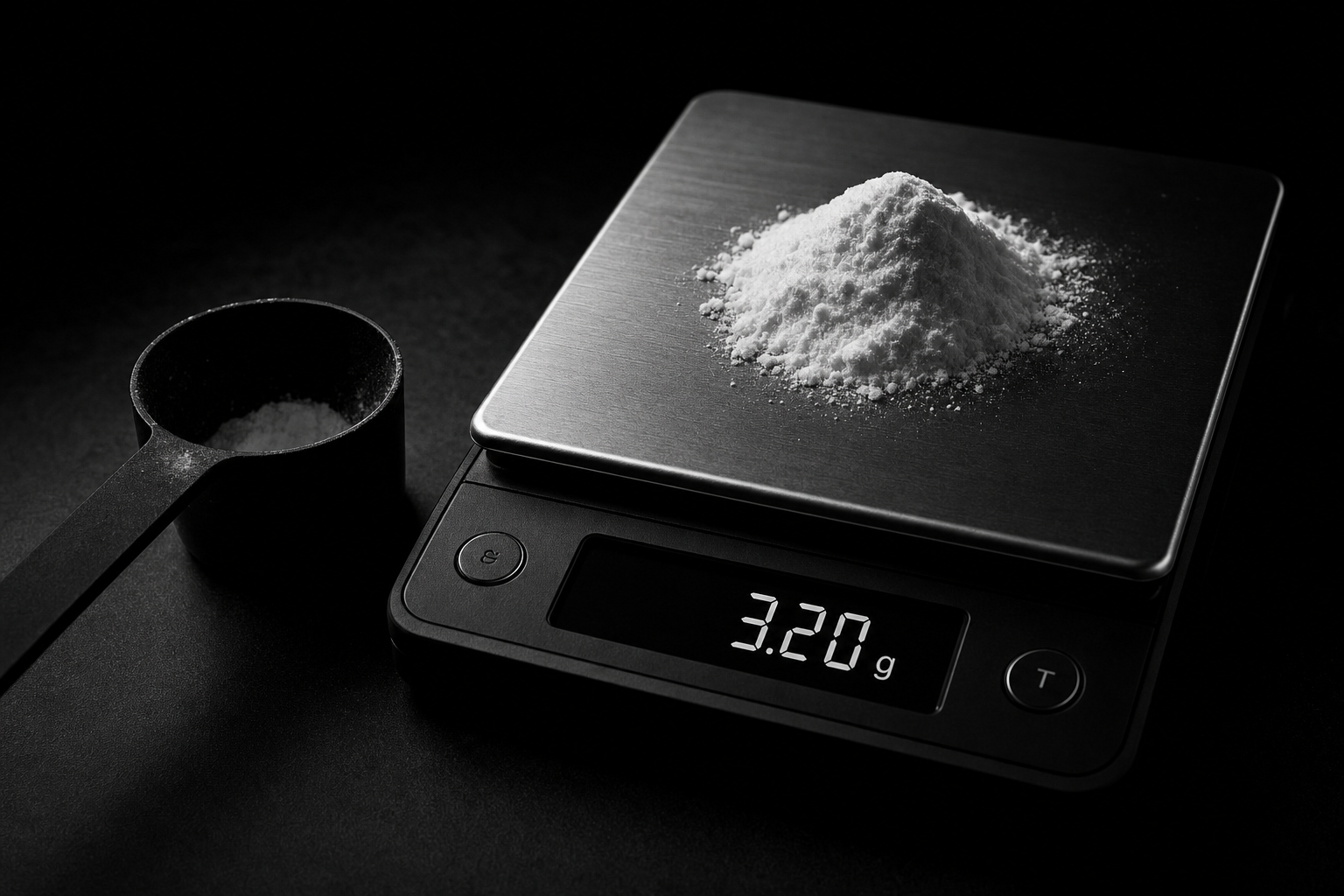
Beta-alanine is the canonical example. The research that established beta-alanine as an endurance and muscular-performance aid used a daily dose of 3.2g for at least four weeks. That's the threshold where carnosine in the muscle starts to accumulate enough to make a real, measurable difference. Anything less is biology theater.
Walk into any supplement store and pick up ten pre-workouts. Half of them list beta-alanine on the label. Now turn the bottle around. Most are dosed somewhere between 1.5g and 2g. Some hide behind a 'proprietary blend' that gives you no number at all. They're trading on the ingredient's reputation while delivering a fraction of the dose required to do anything.
What 'clinical dose' actually means
A clinical dose is the dose that produced the effect in the peer-reviewed research that the brand is implicitly invoking when they put the ingredient on the label. It's the dose that did the thing — strength, endurance, recovery, focus, sleep onset, whatever the claim is.
There's no industry police that enforces this. Brands can put any amount of any ingredient on the label and use the same marketing copy as someone using ten times the dose. The buyer carries the burden of cross-referencing.
Our standard, ingredient by ingredient
- 01L-citrulline malate — 6g (research range: 6–8g for performance and pumps)
- 02Beta-alanine (CarnoSyn®) — 3.2g (research threshold: 3.2g/day)
- 03Betaine anhydrous — 2g (research range: 2.5g but our absolute floor is 2g)
- 04Caffeine anhydrous — 300mg (high-end ergogenic dose, paired with L-theanine for clean lift-off)
- 05L-theanine — 200mg (1:1.5 caffeine ratio for crash-free focus)
- 06Creatine monohydrate (Creapure®) — 5g (the simplest, most-studied dose in supplement history)
- 07Glycine (in SLEEP) — 3g (research range for sleep-onset benefit)
- 08Apigenin (in SLEEP) — 50mg (the dose that shows up in the chronic-stress and sleep-quality literature)
Every milligram is on the label. Every source is named. There are no proprietary blends in any product we sell. If you want to fact-check the dose against the original paper, you can. We hope you do.
“If we put it on the label, it's there to do a job. Not to sit on the back of the tub looking impressive.”
Why this is more expensive (and we don't care)
Clinical doses cost more. That's not a marketing line, it's basic math: putting 3.2g of beta-alanine in every scoop costs roughly twice what putting 1.6g costs. Multiply that across an entire formula and you understand why the cheap pre-workout exists.
Our prices reflect what we put in the tub. We'd rather make less margin per unit and ship a product that actually works than join the race to the bottom.
If you've ever bought a supplement and wondered why you don't feel anything, this is almost always why. It's not your body. It's the dose.